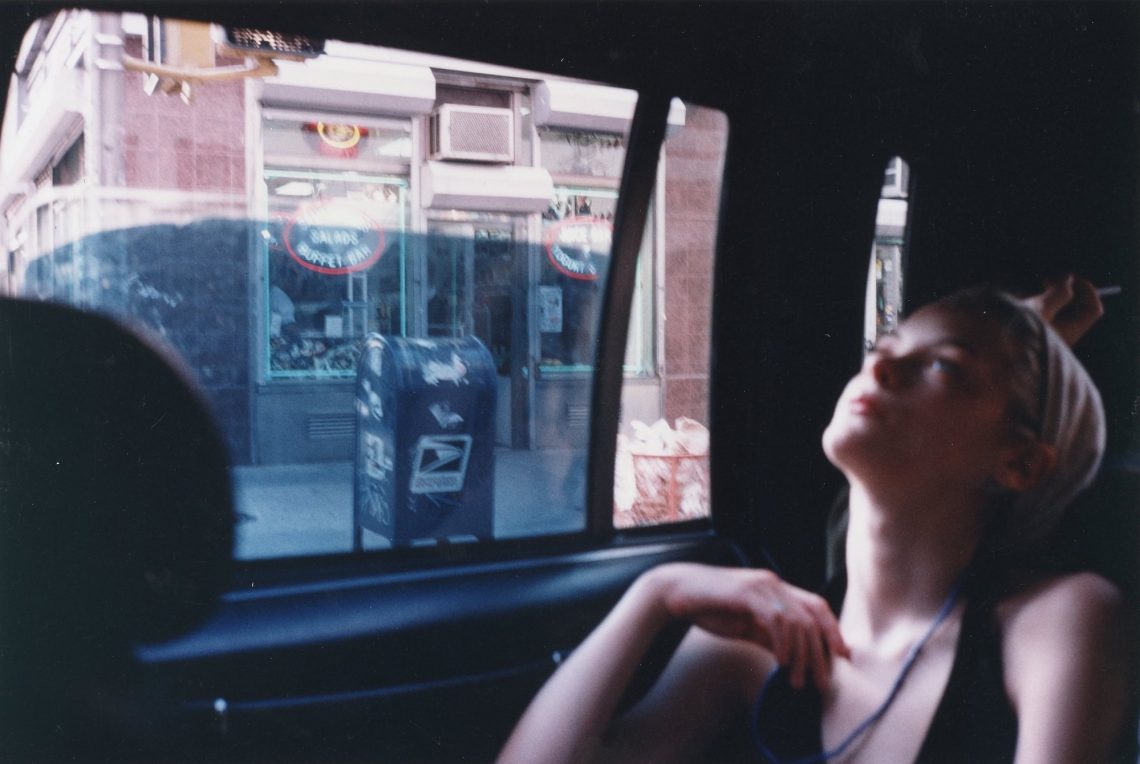
Photographs of hollow-cheeked models– eyes ringed with dark circles, cigarettes dangling loosely between skeletal digits– became the early 1990s archetype. Gia Carangi, Jaime King and Kate Moss, shot in intimate lighting, defined the era’s ideal woman: pale, gaunt, and deliberately fragile. Much of this aesthetic was shaped by Davide Sorrenti, whose haunting grunge-inspired depiction of waiflike models in realistically ordinary, almost trivial settings, helped cement what we today know as “Heroin Chic”. Through magazines and runway shows, these portraits turned into the decade’s beauty standard. Extreme thinness and exhaustion were no longer presented as warning signs, but as a concrete style.
More than three decades later, similar photographs have begun circulating once again across social media feeds, for everyone to consume.
With the long-awaited release of Universal Pictures’ Wicked: For Good, the sequel to the Broadway musical adaptation directed by John M. Chu, audiences have been flocking to their nearest cinema for the promised conclusion. Despite performing even better than the first film, the leading ladies’ appearances sparked not only controversy but also concern throughout the internet. Moreover, on February 22nd, the 79th British Academy Film Awards–more commonly known as the BAFTAs–were held, celebrating the most renowned actors of today. One in particular caused a stir: Emma Stone, starring in Yorgos Lanthimos’ Bugonia. In a short video published on Instagram, nutrition scientist Jess Baker described Stone’s physique as a tell-tale indicator of malnutrition: “When clinical signs of malnutrition are touted as beauty standards, all women are harmed.”
Viral videos and pictures of Ariana Grande, Cynthia Erivo and Stone have been scrutinized by fans and commentators alike, many of whom view the actresses’ increasingly narrow frames as part of a wider cultural shift back toward the ultra-thin look once associated with the 90s “Heroin Chic” aesthetic. In reality, what truly matters is less their physique than the pattern their public image reinforces.
Trends– whether it’s fashion, music or any other cultural sphere– are cyclical. Society revisits the past every 20 years or so, gathering inspiration from the culture en vogue at certain moments in history. The year 2026, marked by the revival of low-rise baggy denim, slip dresses, belly button piercings and animal print under the umbrella of “Y2K”, suggests that the pendulum is swinging backward once more. In some way, it bids a quiet adieu to the “body positivity” movement that defined much of the 2010s.
For nearly a decade, “body positivity” encouraged the promotion and celebration of bodies coming in all shapes and sizes. Millennial women– who had lived and suffered the restrictive beauty standards of the 1990s– actively fought for a world that challenged the glorification of extreme thinness in media and fashion. As the Y2K aesthetic returns to the forefront, old ideals that came with it begin to re-emerge.
The rising popularity of Ozempic– a medication prescribed for adults with type 2 diabetes, also gaining widespread attention for its weight-loss effects– coincides with this shift. Celebrities including Oprah Winfrey, Serena Williams and Elon Musk have all spoken up about their use of the “magic” injections in their weight loss journey, setting an example for audiences behind the screens and reawakening society’s obsession with the slimness– bordering on emaciation– that characterized the “heroin chic” era.
With the resurgence of this fascination has come the return of the strict diet culture of the 1990s. A single scroll through social media makes it difficult to ignore that the stigma around weight, once thought to be fading, is quietly making its comeback. People– influencers, stars– are losing weight fast, and they are wearing their disordered eating as a badge of honour, waving it like a flag. Body checks, workout routines, “What I Eat in a Day” videos and healthy snacks flood younger generations’ feeds, discreetly shaping the adults they are becoming. According to the World Health Organization’s 2019 research, approximately 14 million individuals worldwide grapple with eating disorders; a review from 2023 states that up to 22% of children and adolescents show signs of disordered eating.
Jameela Jamil, British actress and activist, felt the need to respond to this increasingly concerning reality: “There is a rapid rise of the aesthetic of emaciation amongst women in Hollywood,” she said. “I resent this beauty standard being pushed on everyone, […] and fear the impact on the impressionable people at home, thinking that is the only way to be accepted.”
The difference between the 1990s and today lies less in the aesthetic itself than in the speed at which it spreads. “Heroin chic” once flourished on glossy magazine pages and fashion catwalks. Now, it circulates endlessly through algorithms and the web. On Instagram, TikTok and Tumblr, curated videos and images of skinny bodies transform restriction into spectacle for viewers of all ages and all genders. Sorrenti’s portraits of hollow-cheeked models have multiplied; today, the increasingly accessible internet allows anyone to recreate the aesthetic themselves, turning their bodies into the perfect images that established the “Heroin Chic” trend.
ArgueSKE 1994-1997, Davide Sorrenti